




Choking can be described as an unforeseen emergency which requires immediate action and this information is important for every parent or caregiver. This article shall prepare the readers with the necessary skill and information to act on an occasion when a child is choking. We will look into the steps you can take to notice the indications of choking and the procedures to be followed when a child shows signs of it. By mastering these crucial steps, you will be able to assist in the potentially life-threatening circumstance of a child.


What are the First Aid Steps if a Child is Choking?
What approaches can be used in eliminating choking hazards among children?
To eliminate potential choking hazards in children, limiting exposure to objects and foods that cause choking is key. It includes but is not limited to nuts, ropes, toy replicas, balls, grapes, popcorn, and hard candies. Avoid the spoons wholly and monitor young children during meal times and playtime. Toys should be appropriate for age or avoid young children putting any small object capable of going through a toilet roll in their mouths since that poses a risk of choking. Period look around, child-proof any areas that remain unsupervised, and teach children to chew food well.How to Perform Back Blows and Abdominal Thrusts?
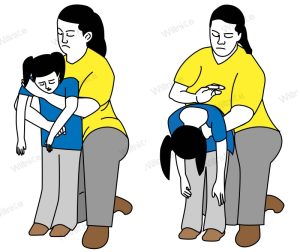
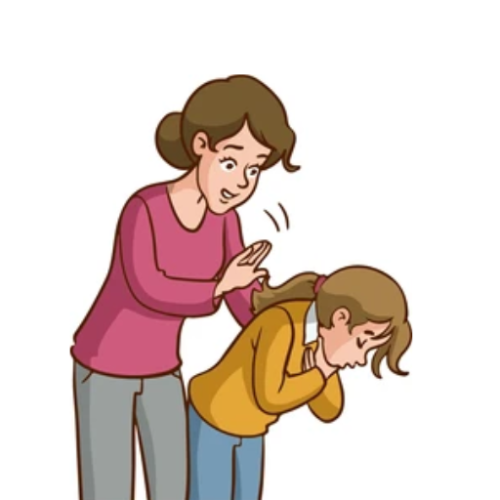
Start giving back blows first if the child is choking and is unable to cough, speak or breathe. Stand behind the child, and gently forward them over a little by supporting their chest with one hand. With the hand that isn’t supporting the child’s chest, give the child’s back (between the shoulder blades) five strong-back blows. If these do not work either, proceed with the abdominal thrust. Stand behind the child and place both of your arms around the child’s waist; place a fist just above the navel. With the other hand grasp the fist and thrust rapidly upwards. Repeat this technique of five back blows followed by five abdominal thrusts until the object is thrown out of the child’s airway or the child can breathe without assistance. If the child goes unconscious call 911 immediately and initiate CPR.What to Do if the Object Comes Out or the Child Becomes Responsive?
In case the object dislodges or the child becomes responsive, check the child’s condition for any evidence of breathing difficulties, excessive coughing, or changes in skin or lip coloration. Remain composed and calm while reassuring the child. Even if the child appears good and normal, it is prudent to get a medical checkup because there could still be some underlying problems. Also, advise the child to avoid violent coughing fits, but do attempt to gently cough and eliminate any remaining obstruction, if necessary.How to Help a Choking Infant Under Age 1?
What are the Specific Techniques for Infants?
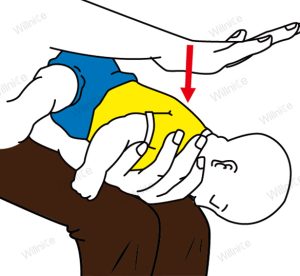
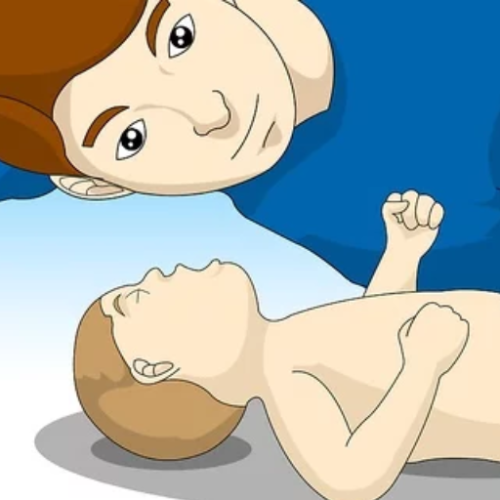
The procedure for performing in the case of a choking infant under one year of age is different from older children. First let’s put the infant down on the person’s forearm with the child’s palm facing down. At this position, the infant’s head should be lower than the stomach. Now with one hand support the head of the infant and the jaw. Then use the heel of your other hand to give sufficient force of up to five blows in gentle back striking motion striking the mid-cervical region of the infant. If the object does not dislodge, the infant is now turned to the other side with his head tilted with the head still lying lower than the chest. Using two fingers compress this region of the infant's chest five times quickly in up-strokes, the upper breastbone, and nipple line below the center of the chest. Gentle backward strokes, and firmness of the infant's chest, mummy doctors should alternate between five compressions or until the work comes out or the infant could breathe, cough or makes noises. In the event of the infant falling unconscious then the responders will attempt to call emergency services straight away and resuscitation will begin.When to Call 911 or Seek Medical Help?
If an infant becomes unresponsive, or if, after repeated use of back blows and chest thrusts, you are still unable to remove the object, call 911 or rush for medical help. Also, obtain medical assessment even if the object is removed and the infant appears comfortable as there could be some underlying problems or remaining difficulties with the airway.What to Do When a Child is Still Choking?
When Is It Appropriate to Apply Chest Thrusts or Perform the Heimlich Maneuver?
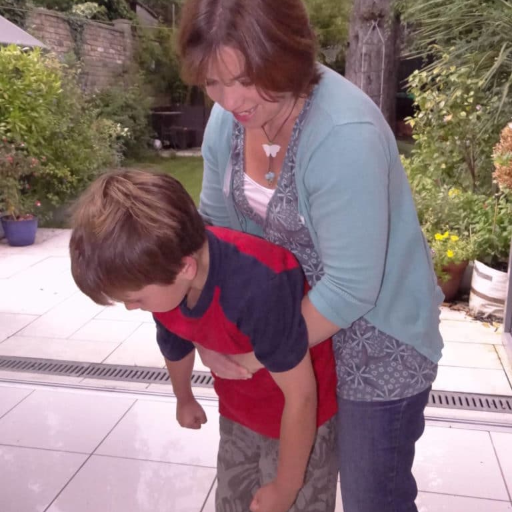
For children who are more than 1 year old and are still choking, it is recommended that you do the Heimlich maneuver. For such cases, approach from behind the child holding the arms perpendicular to the waistline. Use the fist’s thumb portion to create a fist against the stomach slightly above the child’s navel. Use this fistful to grab the other hand and envisage it creating a Y thrust in a particular upward direction. Each push should be quick, unique, as well as powerful. Continue doing them until the stuck object is dislodged and the child’s ability to breathe or cough is restored. If the child does not regain consciousness, get an ambulance and start performing cardiopulmonary resuscitation or CPR.What To Do When A Child Is Nonresponsive?
The first thing that you should do is call emergency services right after the child is nonresponsive, followed by commencement of CPR. The patient suffering from Non-response should also have one arm straightened and the wrist bent down. He or she should be placed in a flat area. Use one hand for pressing and thrusting around the center of the child’s chest for about two inches deep and expand fully back after each thrust. For every 30 chest compressions, give 2 rescue breaths if you are trained in this. Continue these steps until help arrives or the child becomes responsive.How Can the American Red Cross Help with First Aid Advice?

Where to Look For First Aid Training, Lessons and Resources?
When it comes to first aid training and resources, the first thing to do is wash your hands and go to Red Cross America’s website - it has a ton of first aid training information and resources which can be done online as well or physically. At the AR, individuals can access an interactive map of certification courses for first aid and CPR inh their locality or do the courses over the web. Moreover, American Red Cross makes sure to provide free materials as well as apps to the public so that they do not remain ignorant in times of crisis. All the above resources help in making competent enough individuals to manage the frequent emergencies more professionally and clinically.What Features to Expect from a Quick First Aid Application?
First Aid Apps offer guidelines and assist quick management of incidents by providing step-wise guidance to manage the situation. They include tutorials and quizzes, checklists and similar functionalities that enhance the readiness of the users. By having these apps on your smartphones, you can easily access easy-to-follow yet detailed information, which helps in you being around when the time comes for you to be needed.What are Common Choking Hazards for Children?

How Can Parents Avoid Children Choking?
To prevent choking in children, there are certain measures that can be put into effect. Children should be made to sit and concentrate to eat without moving around the room or running around. Food should also be cut into tiny pieces especially for people with younger children and avoid giving any round and hard food such as whole grapes or nuts. Also ensure that toys and small hazardous household items are placed out of reach. Pay attention during mealtimes and urge the child to take time to chew the food well before swallowing. Such situations also require the informants to educate the rest of the caregivers and family members on how to administer first aid so as to manage choking if it occurs.What is Caution in Regards to Small Objects in the Mouth that Will Be Dangerous?
Choking threats among children include broader category of small object that includes toys with parts, marbles, currency coins, button batteries and any other small loose items. Also there are office supplies and incidental items in the homes, small items like a paper clip, the it pen cap, or any piece from a board game can cause harm and should be disposed of properly. It is therefore essential to ensure any loose small item be securely locked up and away from children’s access.Reference sources
-
Red Cross UK - First Aid for a Child Who is Choking
-
Stanford Children's Health - How to Help a Choking Child
-
NHS UK - How to Stop a Child from Choking
Frequently Asked Questions (FAQs)
Q: What should I do first if my toddler is choking?
A: If your toddler is choking, make sure you remain composed and know the right protocol. It is advisable to check your toddler’s mouth with your fingers to determine whether an object is present and easily accessible. If not, do not try to remove it since this may bury it inside the throat.Q: If the dislodged object is not within sight how do I administer first aid to children over the age of 1?
A: If the child is above 1 year of age, if the child is aged more than 1 year, stand directly behind the child and pull them slightly forward. Deliver a maximum of four or five vigorous pinches around their shoulder blades using the palm of one’s hand. If that does not work, then perform five abdominal thrusts against the child who is standing in front of you, instead of clenching both your hands and putting one of them in between the belly button and lower ribs and thrusting straight up and inside.Q: What should I do to resolve the choking in an infant?
A: In the scenario of relieving an infant, position your baby face down on your forearm while providing support to their head and neck. Deliver up to five back slaps with the palm of your hand. If that doesn’t work, place the baby on his back and use two fingers to perform five chest compressions just below the sternum.Q: During a choking episode, when is it necessary to call for help?
A: If your child is choking and you are the only one, you must call for assistance right away. Make sure that help is available to assist you or call for emergency services.Q: If the object is removed, should I still call for an ambulance even if the object is removed?
A: Of course 999 must be dialed if the obstruction was caused by a foreign object in a child's mouth and this object created a choking sensation before being expelled. This is especially true if the child was having trouble breathing, lost consciousness, or there is a good suspicion the object is still somewhere in the upper airway.Q: What measures should I take to stop my child from choking?
A: Children do choke on relatively small pieces of food so parents need to watch over them during meals, cut food into small bites, and put away any small items within reach. Children should be taught how to chew their food properly, avoid running around while eating, or doing any other activity for that matter.Q: What action ought I to refrain from if my child is choking?
A: Don’t do a finger sweep in the mouth of a child if you cannot see an object. It is likely to push an object in the throat further down. Do not, as well, perform water giving or vomiting attempts with the child.Q: What is the importance of choking first aid and how does it assist in rescuing people?
A: It is important because those who have choking first aid knowledge will be up to the task effectively and swiftly at the crucial time of need by fixing an object and restoring an airway which would turn out to be life saving.1845





 Anti Choking Device
 Login with Google
 Login with Facebook